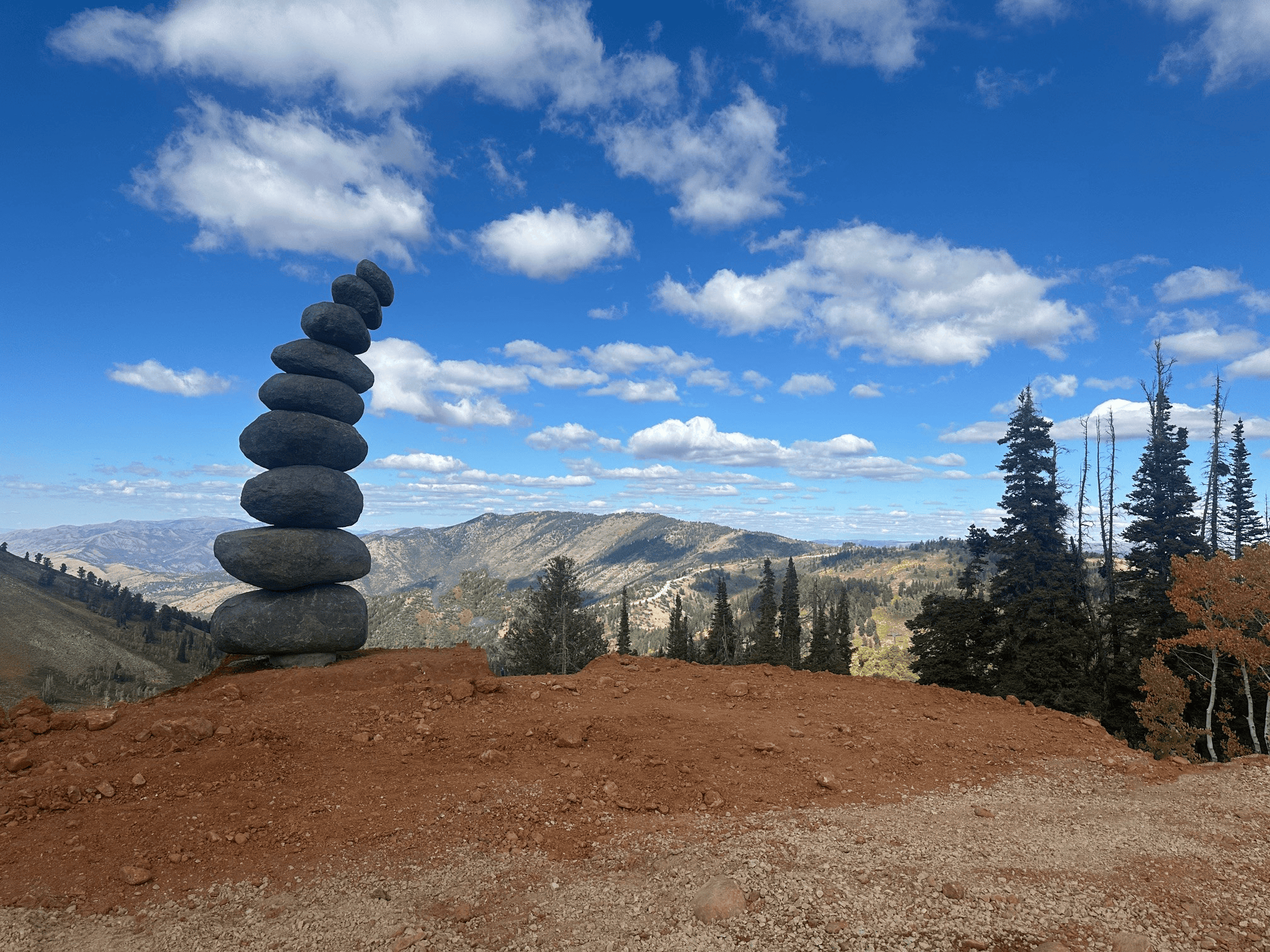
Showcasing Coldspring’s advanced stone fabrication and engineering, the Phase of Nothingness – Stone Stack installation unites nine massive granite boulders in an ambitious alpine sculpture at Powder Mountain.
Located an hour north of Salt Lake City, Powder Mountain is one of North America’s largest ski areas, with 154 separate trails, two terrain parks and nine lifts spanning 5,000 skiable acres. The fully independent resort limits daily ticket sales to maintain low skier density, allowing visitors to spend less time in lift lines and more time enjoying nature, which includes 360+ inches of natural powder that falls annually.
To further elevate the visitor experience, Powder Art Foundation (PAF), a nonprofit launched in 2024 by Netflix CEO Reed Hastings, set out to “activate 12,000 mountainous acres with moments of wonder, with the help of artists both living and dead.” At Powder Mountain, that vision takes shape as an open-air sculpture park, featuring a handful of commissioned installations intended to create a skiable outdoor museum that blends harmoniously with the landscape.
One such work of art is Phase of Nothingness – Stone Stack. Perched 2,000 feet above the base on a prominent knoll where two popular ski runs intersect, it features a 20-foot-tall alpine cairn — nine massive granite boulders stacked in gravity-defying balance, as if frozen at their tipping point. Cairns are rock stacks used as navigational markers in remote areas.
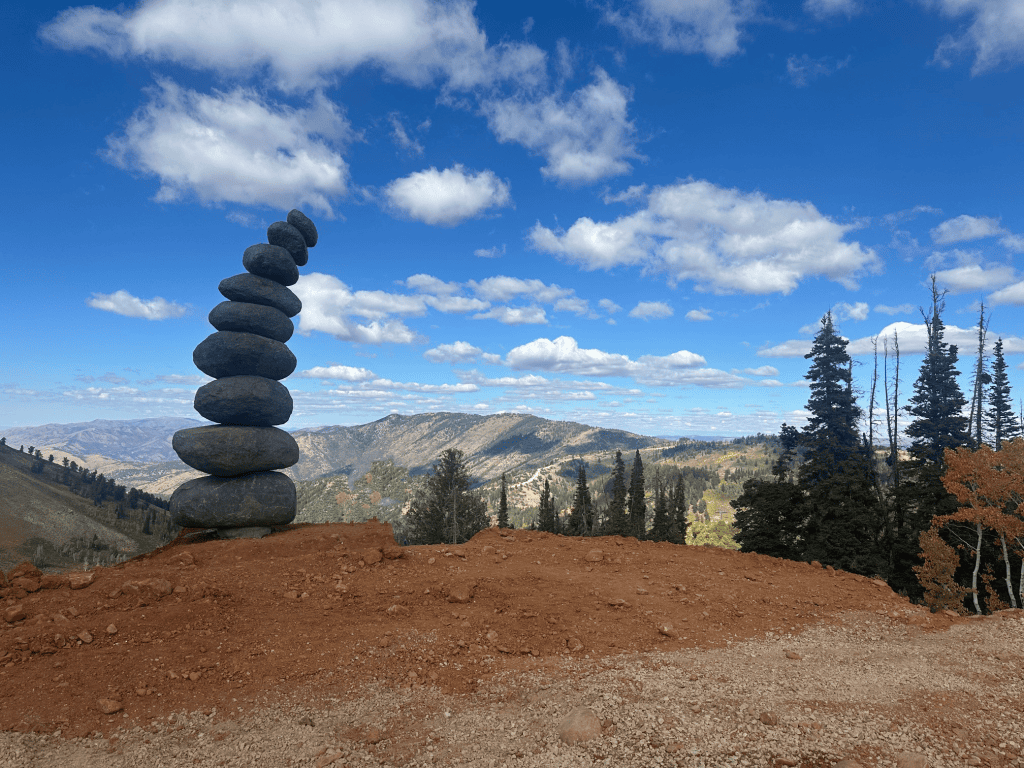
Phase of Nothingness – Stone Stack was conceived over 50 years ago by the late Japanese artist Nobuo Sekine. After showing a scale model in Italy in 1970, his vision for a full-size public monument remained unrealized until PAF and Powder Mountain gave it a permanent home.
“I got a call out of the blue from Tom Braun, president of VertiCon Construction in Dallas, who we’ve partnered with on a lot of projects,” said Rob Barnes, CEO and President of Dee Brown. “Tom said he had a new job where he needed to stack large, natural-looking boulders on the side of a ski mountain, ideally ones that looked like black river rocks. He asked if I knew where to find them. I told him I know exactly where to go and signed on to help.”
Barnes has a 32-year history working with Coldspring, a leading natural stone quarrier and fabricator that owns and operates more than 30 quarries across North America. One of them, near Fresno, California, produces its popular Academy Black® granite.
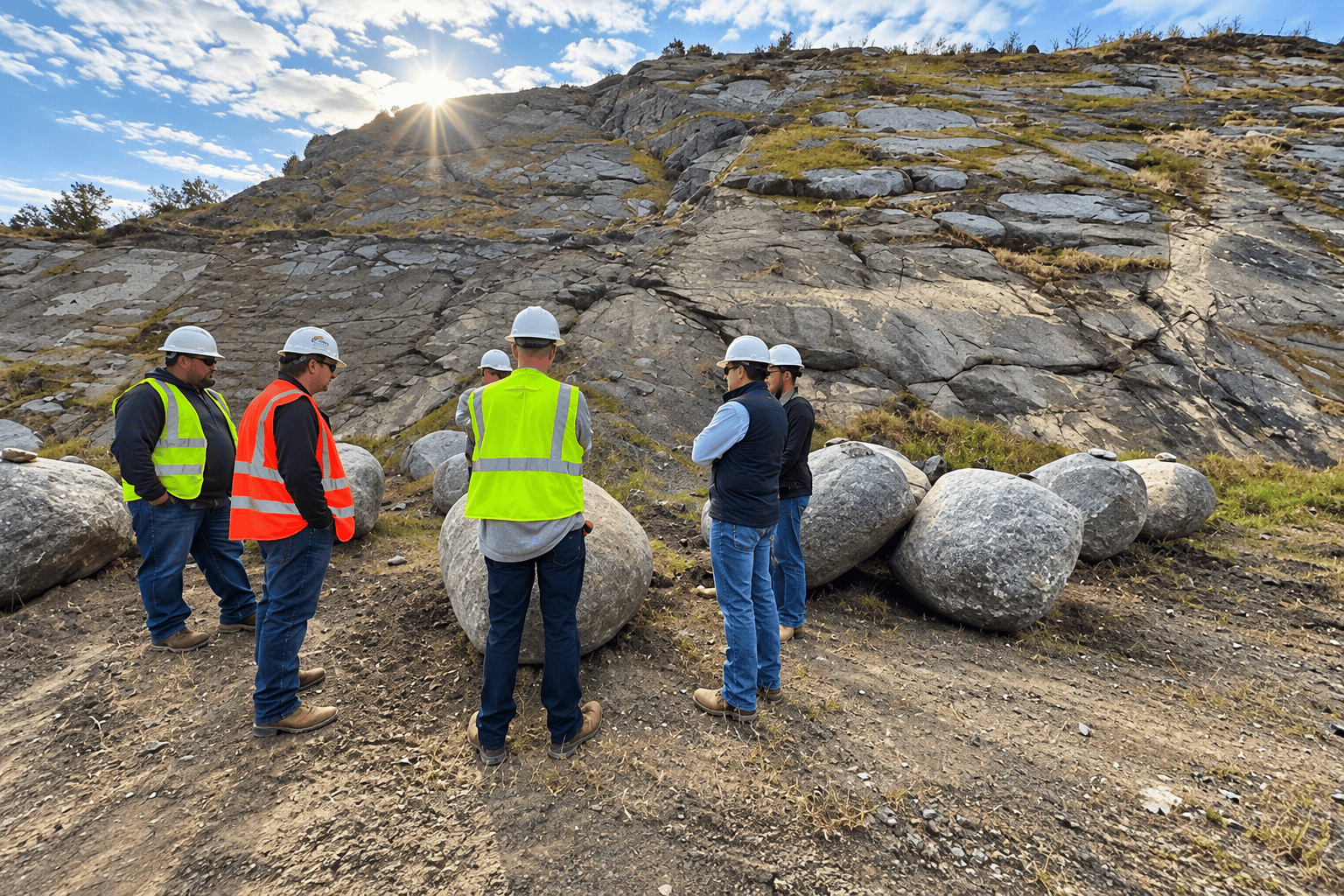
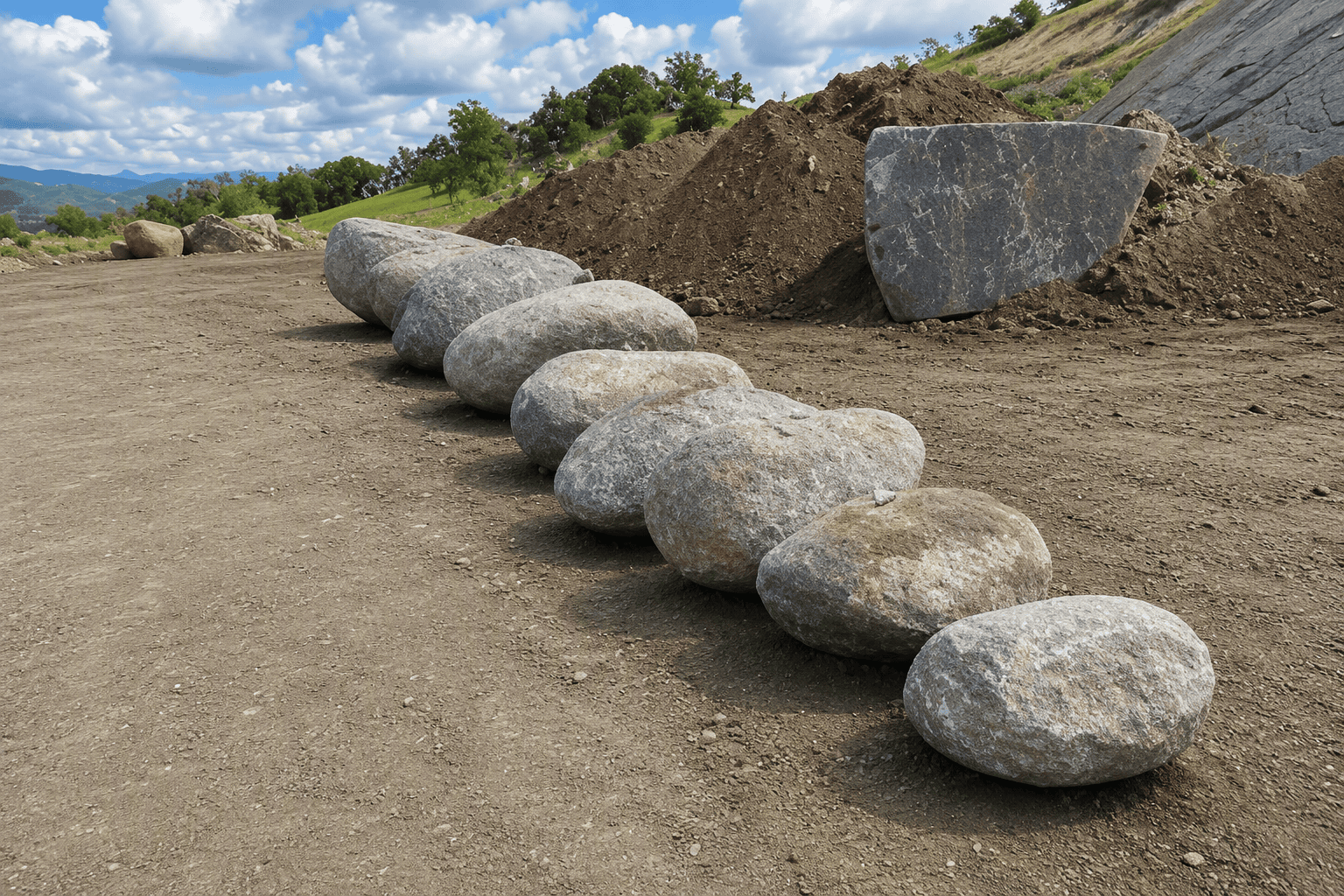
“I have a very high degree of Confidence in Coldspring’s engineering and fabrication capabilities, and this particular quarry by Fresno produces massive, rounded granite boulders, with some as big as a bus,” Barnes said. “After sharing real examples and photos with Tom, he agreed this was the right direction. Once the contract was signed, it was on to selecting, machining and fabrication, and transporting the boulders to Utah for installation on the mountain.”
It was already April 2025 when the team was cleared to visit the quarry for boulder selection, leaving just a few short months to fabricate and install the sculpture in time for the 2026 ski season. It was a compressed timeline that would demand tight coordination across all parties.

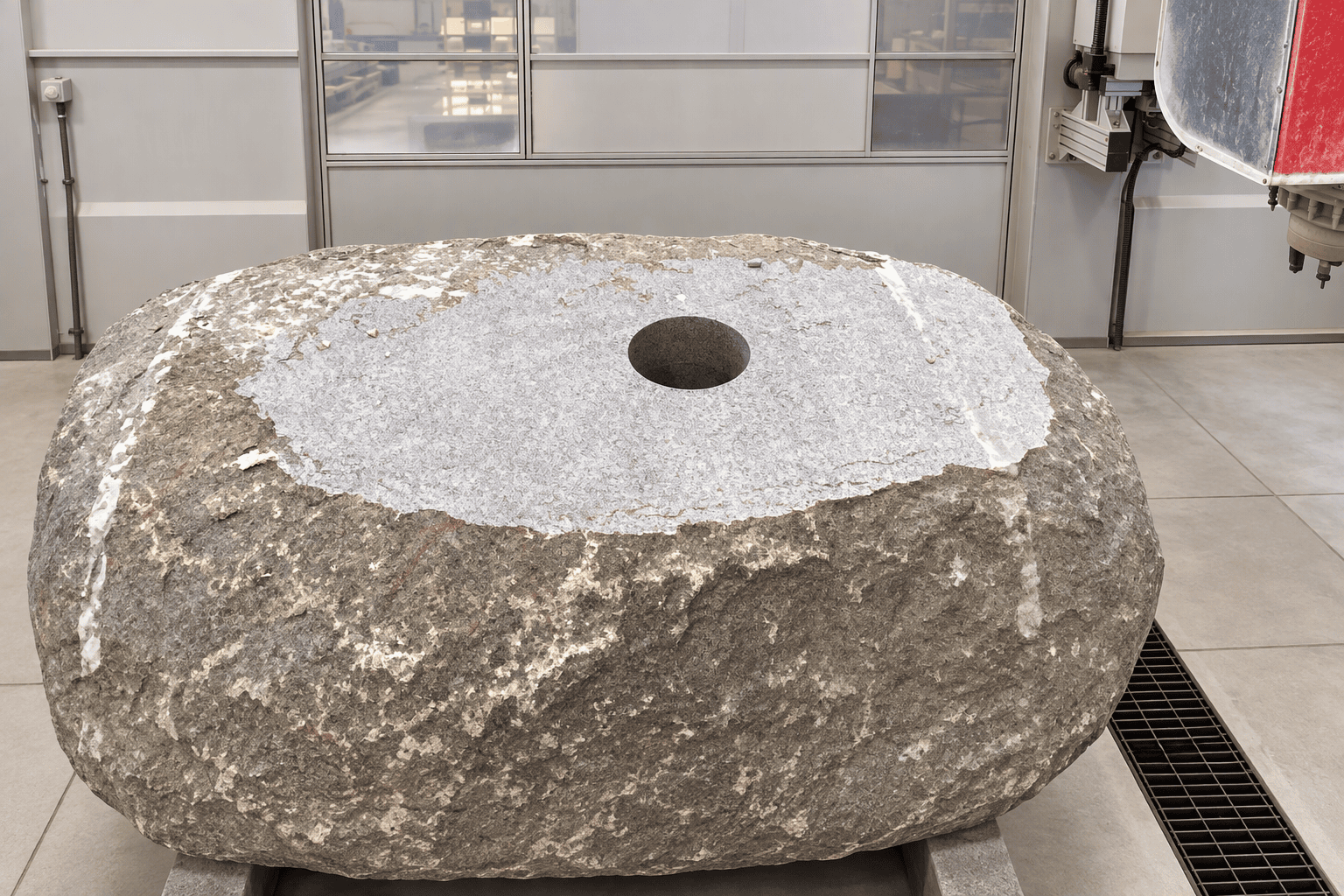
Alexandra Magnus, PAF executive director, joined Barnes at the Coldspring quarry to select the boulders. A scanning technology provider then created a digital model of all nine boulders to determine their exact required orientation, guiding Coldspring in machining bearing pads on the top and bottom of each boulder so that all stack cleanly and securely.
The boulders are stabilized by a concealed steel internal armature that maintains the sculpture’s precarious balance against gravity. The three smallest top boulders — those that appear closest to toppling — were fused into a single preassembled unit prior to installation.
“We weren’t anticipating machining bearing pads on each boulder and having to geolocate the core holes so that the granite boulders stack up exactly as the finished model specifies,” Barnes said. “Things quickly got much more technical than the typical stone fabrication project.”
Site installation was handled by RJ Masonry, a Utah-based contractor. With no direct road access and only open, mountainous terrain, the install team faced significant logistical challenges to move materials and equipment up the slope. Early investment in full-scale mockups at RJ Masonry’s facility, along with precise alignment between Coldspring’s machining and the engineers’ model, helped to avoid delays and keep the project moving efficiently. A stretch of agreeable alpine weather also worked in the team’s favor.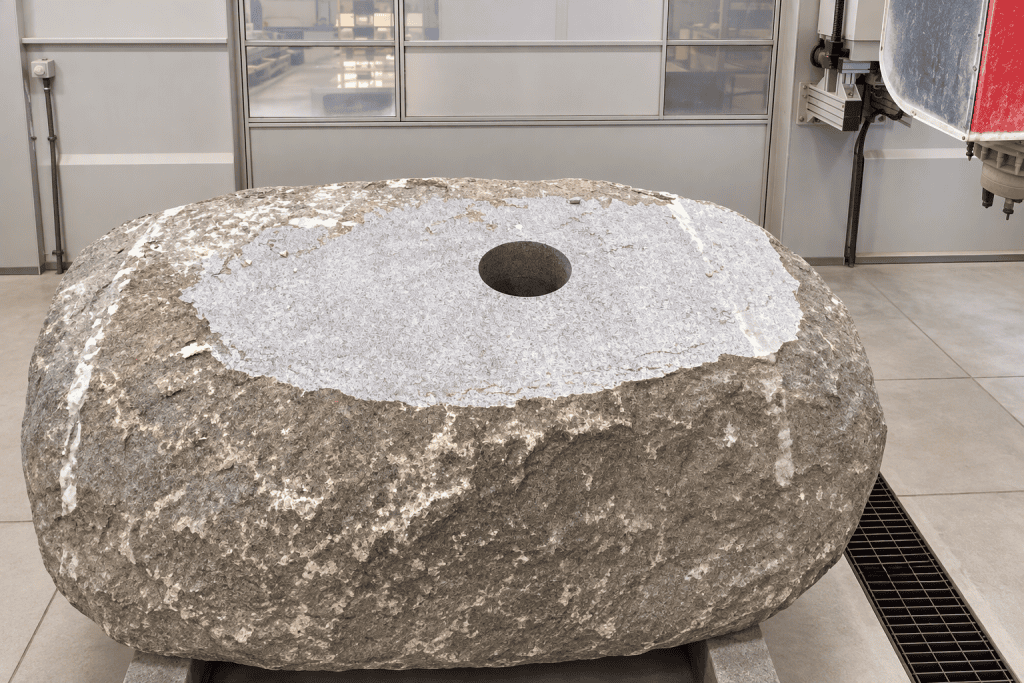
The boulders were transported from the base to the install site using machinery designed specifically for steep, uneven terrain and extremely heavy payloads. Cranes then set each stone into its precise position to complete the sculpture. Three days were allotted for installation, but the work was finished in just two.
“Despite the many moving parts, demanding timelines and input from voices across the country, we came together to create something truly extraordinary,” Barnes said. “We believe the sculpture faithfully captures the artist’s original vision from 50 years ago. Its permanent installation in the mountains is the perfect way to honor Mr. Sekine’s legacy and get his work in front of more people.”
To discover more about the kinds of creations Coldspring has made with our materials, reach out to us today.